Best Resistance Band Exercises for Seniors Over 60 (Proven)
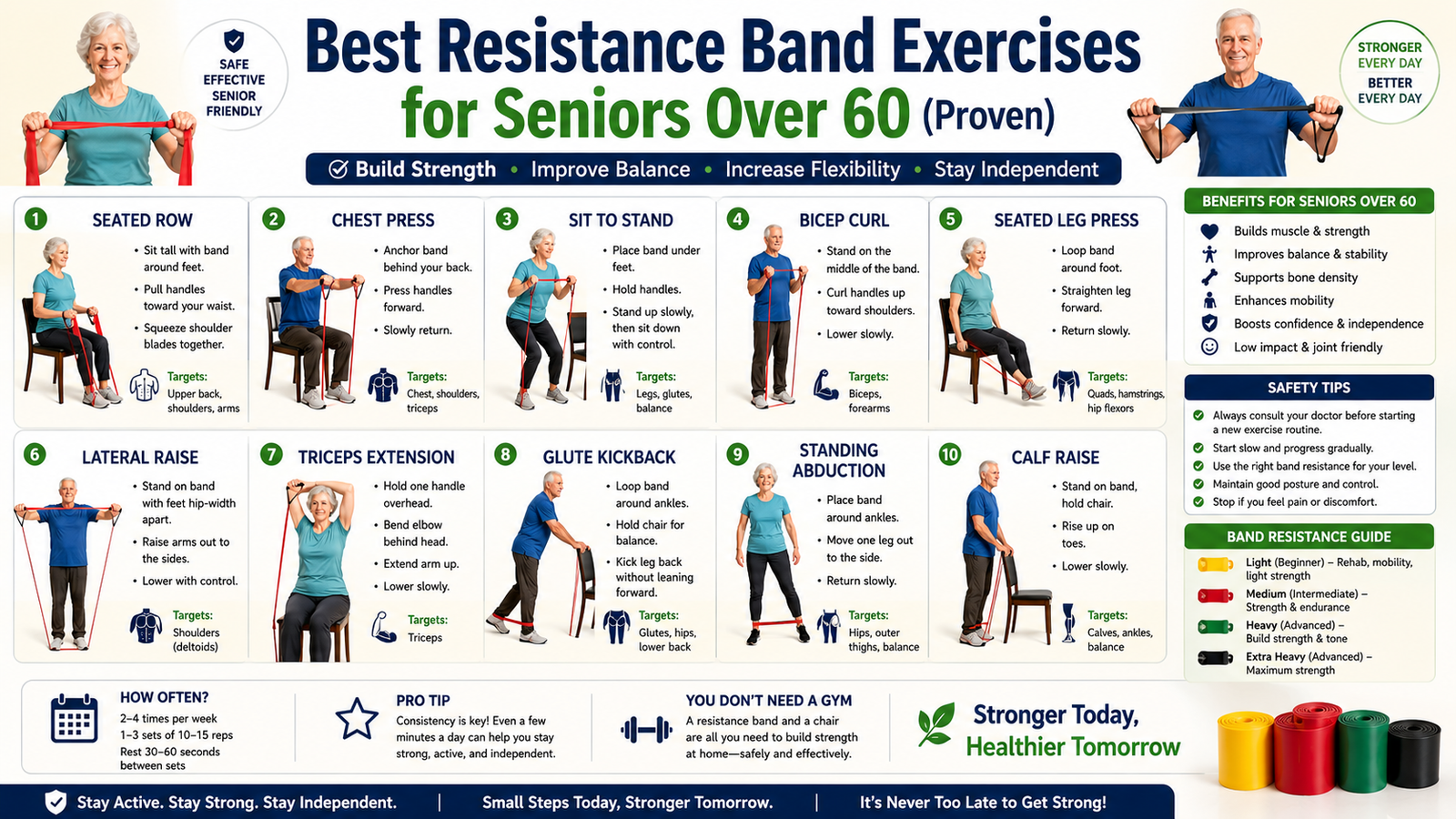
According to research published by the National Institutes of Health, adults lose up to 8% of their muscle mass per decade after age 30. This natural process accelerates significantly past age 60 and directly impacts daily independence. Lifting heavy gym weights is not the only solution to this challenge. Medical authorities consistently point to elastic resistance as a safe alternative to restore muscle tone without stressing vulnerable joints.
Performing the best resistance band exercises for seniors over 60 provides targeted strength building directly from a living room chair.
Key Takeaways
- Elastic resistance protects aging joints by providing smooth tension rather than the dead weight of dumbbells.
- Two days of weekly practice aligns directly with CDC physical activity guidelines for older adults.
- Functional movements like the seated row translate directly to easier daily tasks.
- Safety requires checking equipment for tears before every single use.
Why the Best Resistance Band Exercises for Seniors Over 60 Beat Dumbbells
Many adults abandon strength training programs due to joint pain. Traditional dumbbells rely entirely on gravity. When you lift a weight, the maximum stress hits your joints at specific endpoints. Harvard Medical School notes that elastic bands create continuous tension throughout the entire movement.
This continuous tension forces muscles to work harder while simultaneously reducing the sharp force on shoulders and knees. A 2023 review from the Mayo Clinic highlighted that consistent strength training may help preserve bone density and lower fracture risks. Bands offer an accessible pathway to these benefits.
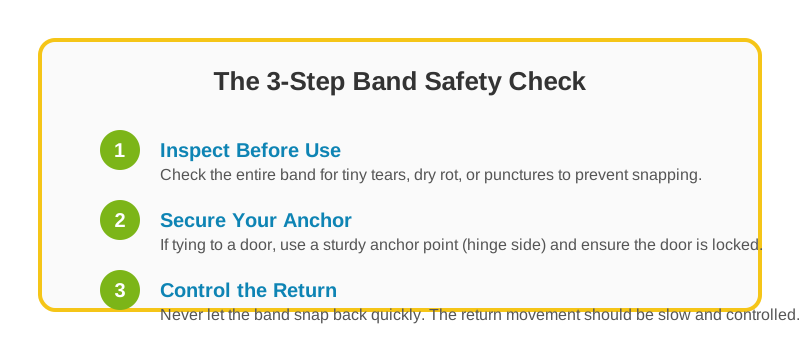
When selecting your equipment, you will typically encounter two primary options: flat therapy bands and tube bands with handles. Both work beautifully for this routine. Start with lighter tension to master the movement before progressing.
| Resistance Level | Typical Color | Estimated Weight | Best Used For |
|---|---|---|---|
| Light | Yellow | 3 to 5 lbs | Shoulder rehab, beginners |
| Medium | Red | 5 to 8 lbs | Chest presses, bicep curls |
| Heavy | Green / Blue | 10+ lbs | Leg presses, back rows |
Safety First: Prepping for Resistance Band Workouts for Over 60
Preventing injury is the cornerstone of any low-impact workout plan. Elastic tools require specific safety protocols distinct from traditional gym machines. Always wear sturdy footwear to prevent the elastic from slipping off your feet.
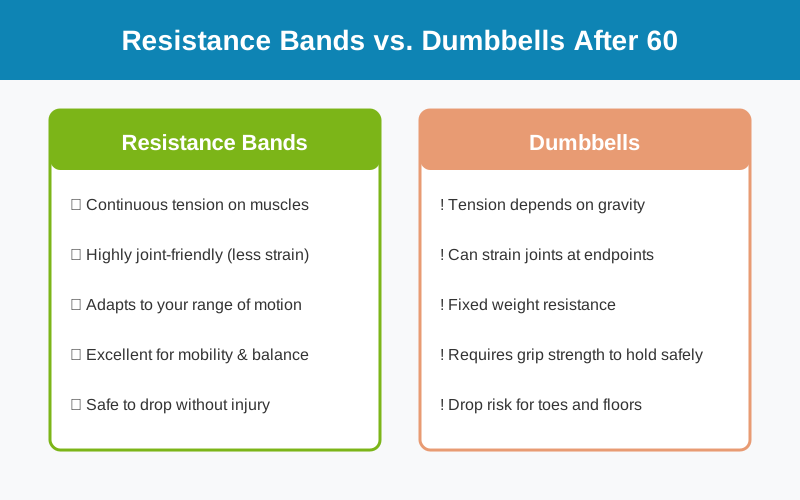
According to the American College of Sports Medicine, controlled breathing is essential during exertion. Exhale during the hardest part of the movement. Inhale as you return to the starting position. Never hold your breath, as this can cause unsafe spikes in blood pressure.
The Routine: Best Resistance Band Exercises for Seniors Over 60
This sequence focuses entirely on functional movements. Functional exercises train your muscles to work together to prepare them for daily tasks. You will need a sturdy chair without armrests and your chosen elastic band.
1. The Seated Chest Press
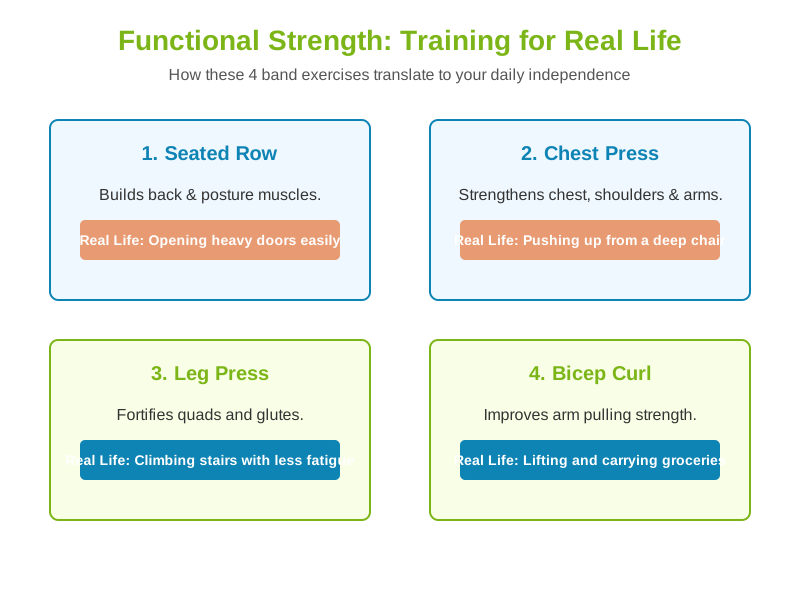
This movement strengthens the chest and triceps. It directly supports your ability to push yourself up from a deep couch or out of a car seat.
- Sit near the front edge of your sturdy chair with feet flat on the floor.
- Wrap the band securely behind your upper back.
- Hold one end of the band in each hand near your armpits.
- Push both hands straight forward until your arms are fully extended.
- Slowly bring your hands back to the starting position over three seconds.
- Aim for 10 controlled repetitions.
2. The Seated Posture Row
Slouching compresses the spine over time. The row strengthens the upper back to pull your shoulders into proper alignment. It also makes opening heavy doors much easier.
- Sit tall and extend both legs straight out in front of you (heels on the floor).
- Loop the center of the band securely around both feet.
- Hold one end in each hand with arms extended forward.
- Pull your hands straight back toward your hips while squeezing your shoulder blades together.
- Slowly release the tension and return to the start.
- Complete 10 repetitions.
3. The Supported Leg Press
Lower body strength is the foundation of balance and fall prevention. This mimics climbing stairs while completely removing knee strain.
- Sit comfortably in your chair and bring your right knee up toward your chest.
- Hook the middle of the band underneath your right foot.
- Hold the ends of the band tightly with both hands resting on your hips.
- Press your right foot straight out against the tension until the leg is straight.
- Control the return as you bend the knee back toward your chest.
- Perform 8 repetitions on the right leg before switching to the left.
4. The Gentle Bicep Curl
Arm strength allows you to carry groceries and lift grandchildren safely. This seated version stabilizes your core while isolating the arm muscles.
- Sit tall and place both feet flat on the floor.
- Place the center of the band under both feet.
- Hold the ends of the band with your palms facing upward.
- Keep your elbows glued to your ribcage.
- Bend your elbows to lift your hands toward your shoulders.
- Slowly lower your hands back down.
- Aim for 10 to 12 repetitions.
Nutrition and Recovery Considerations
Muscles do not grow during the workout itself. They adapt and strengthen during the recovery period between sessions. Medical experts recommend resting at least 48 hours before exercising the same muscle groups again.
Proper fueling plays a critical role in this recovery phase. Consuming adequate protein provides the building blocks your body needs to repair muscle fibers. Exploring high-protein dietary options tailored for older adults can maximize the benefits of your new routine.
Frequently Asked Questions
How often should adults over 60 use resistance bands?
Research suggests two to three non-consecutive days per week is ideal. This frequency meets national physical activity guidelines while allowing adequate time for joint and muscle recovery.
Can I do seated resistance band exercises for the elderly every day?
It is generally not recommended to perform strength training on the exact same muscles daily. You may alternate upper body and lower body days, but resting specific muscle groups for 48 hours yields better results.
What resistance level should a 65-year-old start with?
Beginners should always start with the lightest available tension (usually yellow). The goal is to perform 10 to 15 repetitions with perfect form. Once that becomes easy, progress to the medium tension band.
Are elastic bands better than free weights for arthritis?
Many physical therapists prefer bands for arthritic joints. They do not require a tight grip on a hard metal handle, and they allow for modified ranges of motion if a specific joint angle causes discomfort.
Putting It Into Practice
Implementing the best resistance band exercises for seniors over 60 offers a scientifically supported method to protect your mobility. The key to success is consistency over intensity. Starting with a 15-minute routine just twice a week can yield measurable improvements in balance, posture, and daily energy levels.
Your next step is simple: acquire a basic lightweight band, find a comfortable chair, and commit to practicing just the chest press and seated row this week to feel the difference.
Disclaimer: This article is for educational and informational purposes only. It is not intended as medical advice. Always consult with a qualified healthcare professional before starting any new exercise program, diet, supplement, or making changes to your health regimen — especially if you have pre-existing conditions or take medications.